
Why Your Best Ha Giang Photo Probably Won’t Be the Famous Viewpoint
Most travelers arrive in Ha Giang with a mental photo list. Ma Pi Leng Pass. The Sky Walk. The Nho Que River. A motorbike on a winding road. A dramatic mountain viewpoint with clouds in the background.
Those places are famous for a reason. They are beautiful, dramatic, and worth seeing. But if you travel through Ha Giang with a camera, there is a good chance your best photo will not come from the famous viewpoint.
It may happen before breakfast. It may happen during a coffee stop. It may be a grandmother standing in a doorway, a child watching motorbikes pass, goats crossing the road, fog moving through a village, or morning light touching a stone wall for ten seconds before disappearing.
That is the strange thing about Ha Giang photography: the famous places impress you, but the unexpected moments often stay with you.
Quick navigation
- The famous viewpoint problem
- Why unexpected moments make stronger photos
- Fog: Ha Giang’s natural storyteller
- The grandmother in the doorway
- The child on the roadside
- Coffee stops and quiet frames
- Goats, buffalo, dogs, and the road’s little surprises
- Morning light: the best photographer in Ha Giang
- How to photograph Ha Giang more authentically
- A note on respectful travel photography
The Famous Viewpoint Problem
Famous viewpoints are easy to photograph because they tell you where to stand. You arrive, park the bike, walk to the railing, point your camera toward the valley, and take the photo. The composition is almost already made for you.
That is useful, especially if this is your first time in Ha Giang. But it also creates a problem: everyone else is standing in roughly the same place, taking roughly the same photo, at roughly the same time of day.
The result may be beautiful, but it may not feel personal.
A famous viewpoint gives you scale. It gives you proof. It says, “I was here.” But the strongest travel photos usually do something more. They show how a place felt. They hold atmosphere, timing, and human detail. They feel like they could only have happened in that one moment.
This does not mean you should ignore Ma Pi Leng, the Sky Walk, or the classic mountain passes. You should see them. You should photograph them. But do not make the mistake of thinking the best image must happen there.
In Ha Giang, the road between the viewpoints is often more alive than the viewpoint itself.
Why Unexpected Moments Make Stronger Photos
The best photos often contain some kind of surprise. Not a big dramatic surprise, but a small one: a child stepping into the light, fog covering half a valley, a goat appearing in the road, someone pouring tea, a grandmother looking out from a doorway, a motorbike disappearing around a curve.
These moments work because they are not generic. They are specific. They show not only what Ha Giang looks like, but what it feels like to move through Ha Giang.
A viewpoint can show the geography. An unexpected moment can show the life inside the geography.
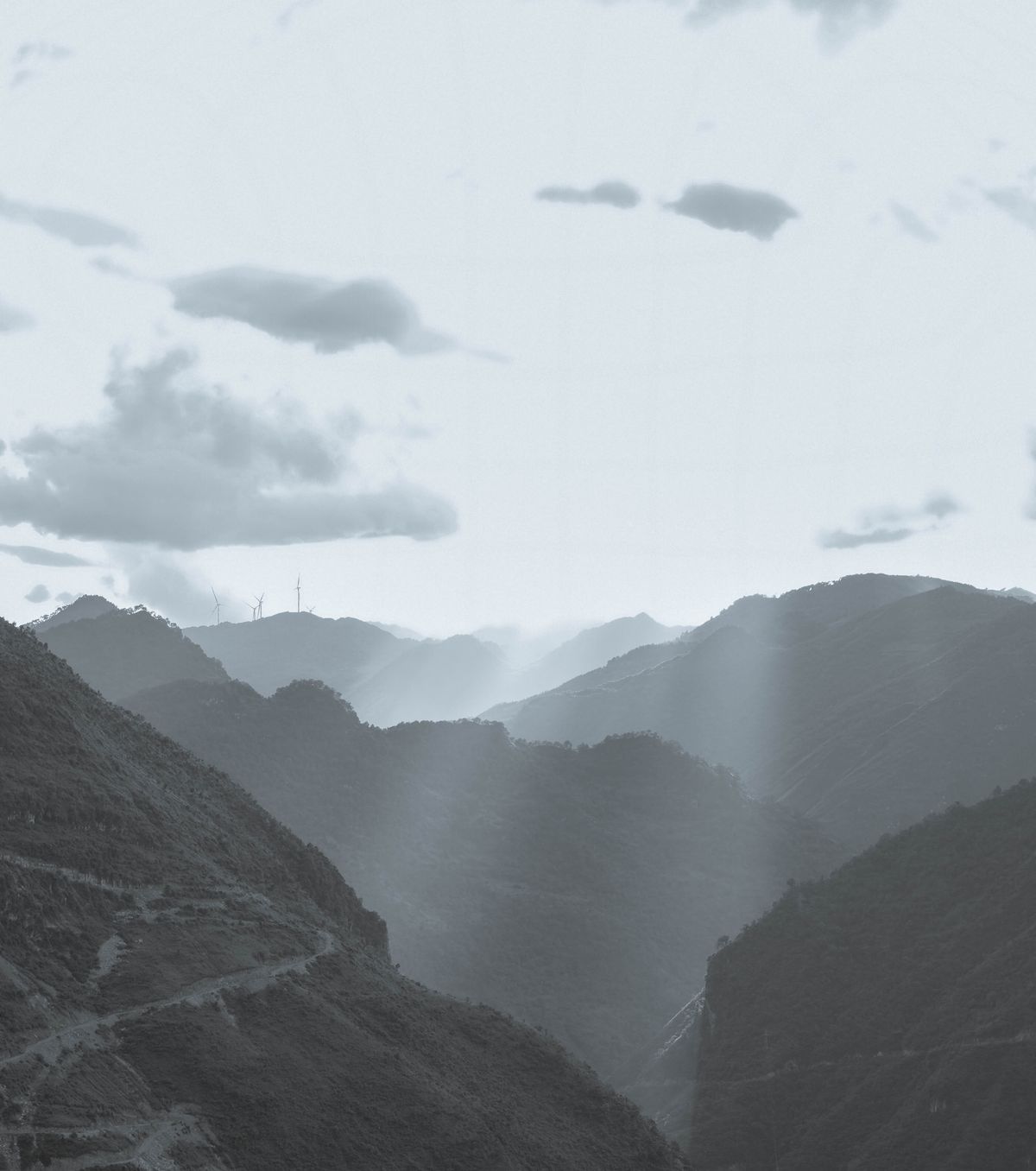
Atmosphere
Fog, clouds, and imperfect weather can create more emotion than a clear blue sky.
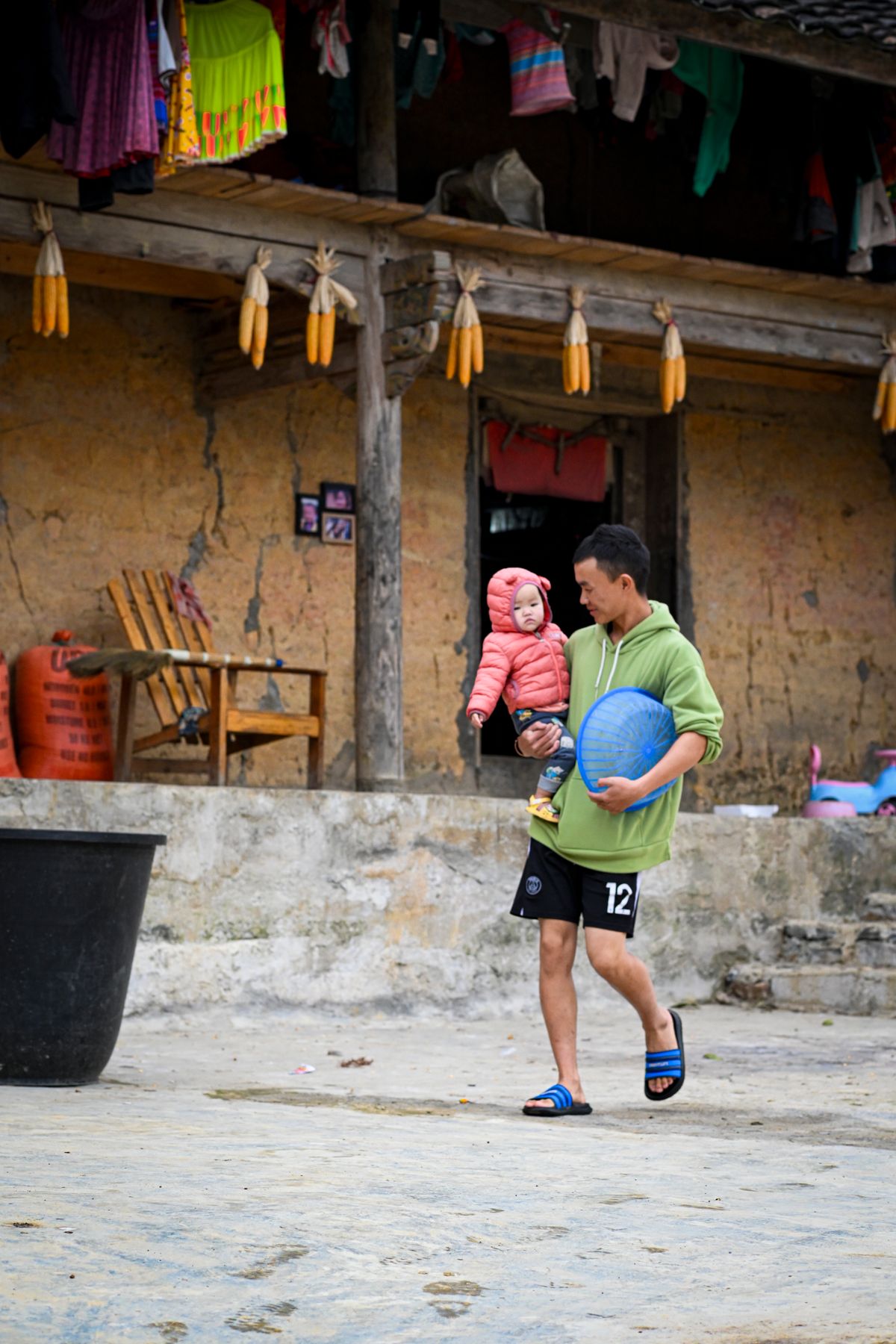
Human detail
Local life gives scale and meaning to the mountains around it.
The famous viewpoint is predictable. That is partly why people like it. But photography becomes more personal when something unpredictable enters the frame.
In Ha Giang, unpredictability is everywhere. Weather changes quickly. Light moves fast. Animals wander into the road. Villages wake up slowly. Coffee shops become observation points. Local people move through landscapes that look impossible to visitors but ordinary to them.
The photographer’s job is not only to chase viewpoints. It is to stay awake to what is happening around the viewpoint, before the viewpoint, after the viewpoint, and sometimes instead of the viewpoint.
Fog: Ha Giang’s Natural Storyteller
Many travelers worry when they see fog in Ha Giang. They think the view is ruined. They came for mountain panoramas, and now the mountains are hidden.
But for photography, fog is not always a problem. Fog is often the story.
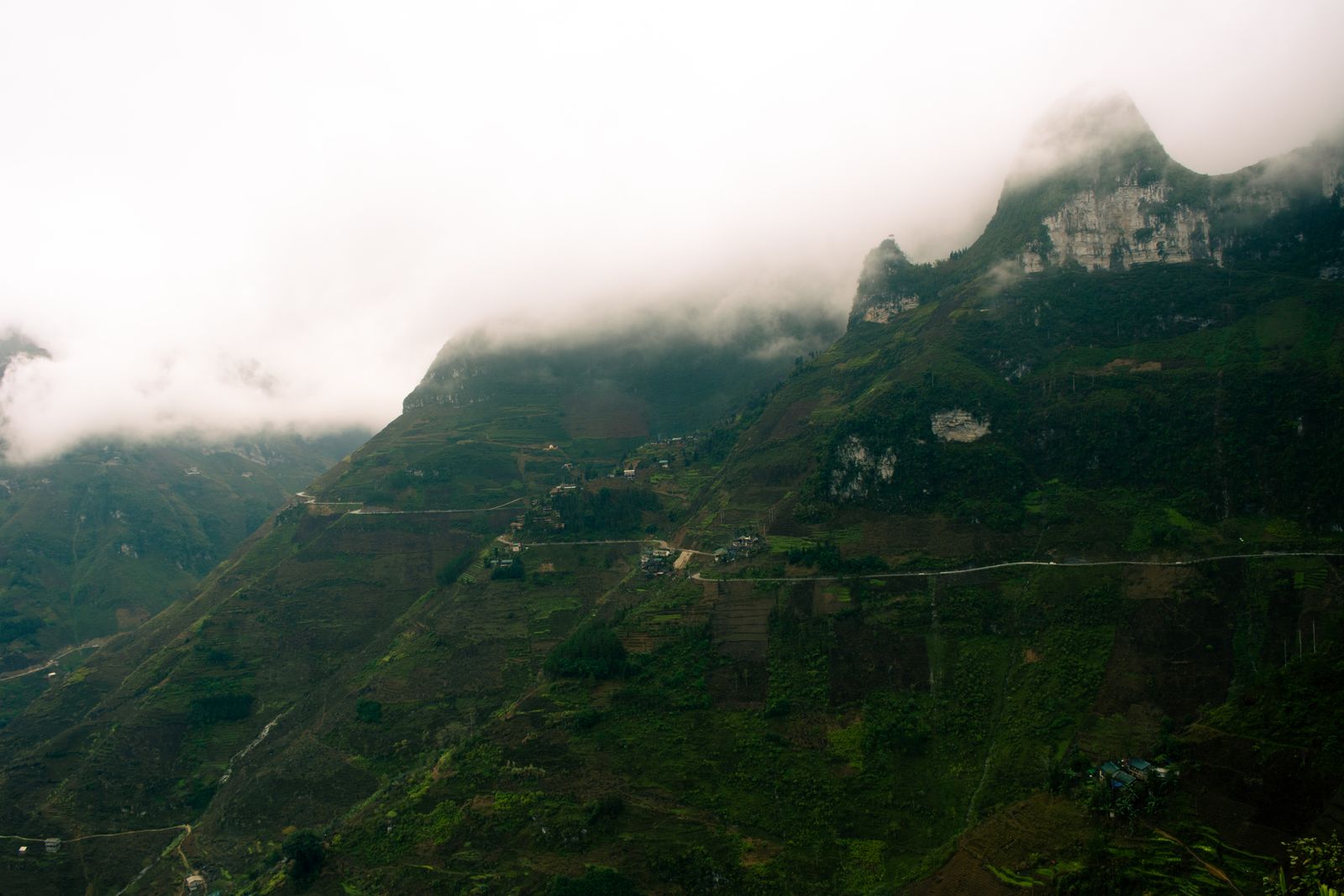
Fog simplifies a scene. It hides distractions. It creates layers. It makes a mountain road feel mysterious. It turns a village into a quiet silhouette. It makes ordinary things — a tree, a house, a person walking, a motorbike light — feel more cinematic.
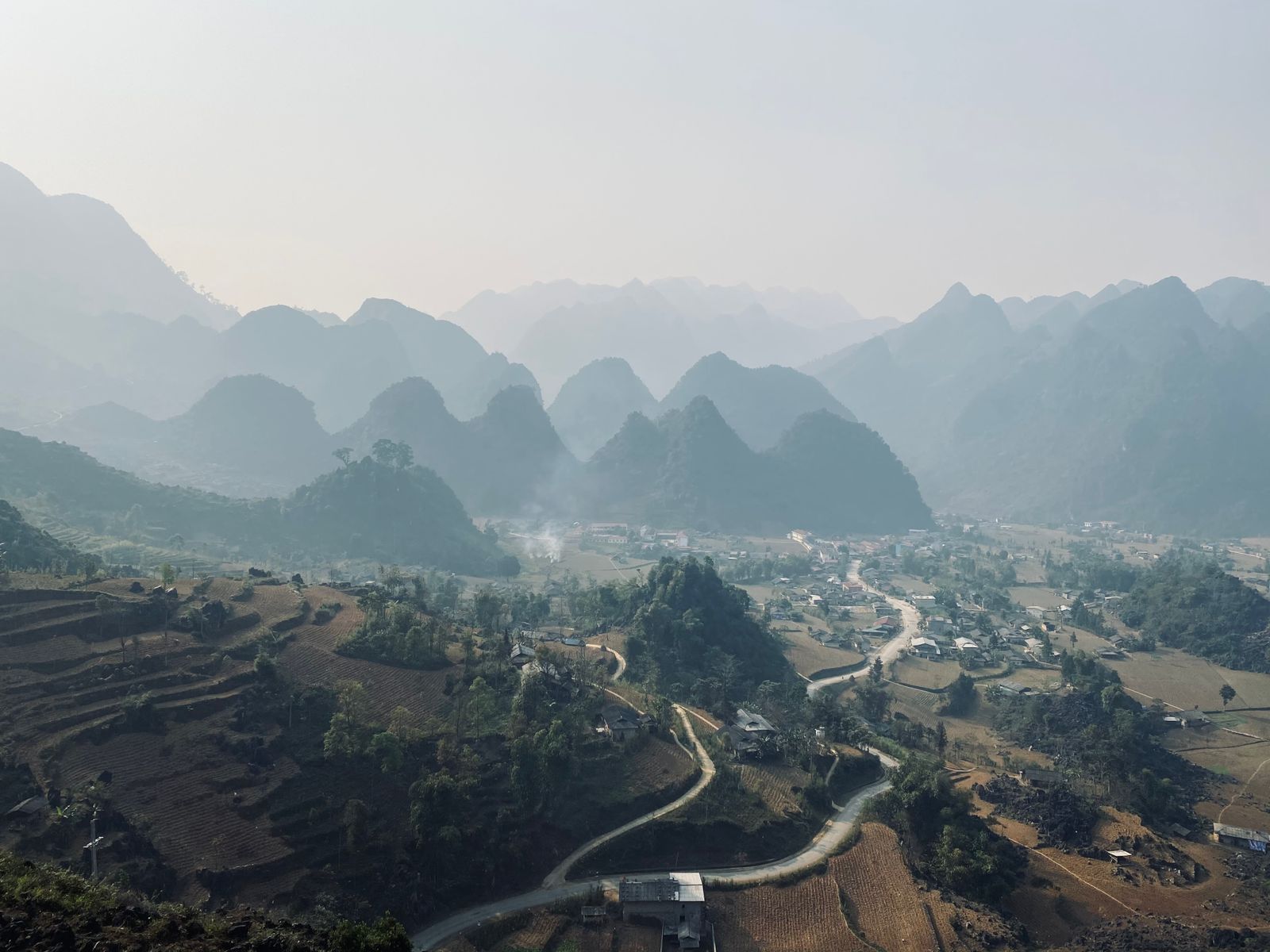
A clear day shows you everything. Fog makes you look harder.
That is why foggy Ha Giang photos often feel more emotional. They do not explain the whole landscape immediately. They leave something hidden. They suggest rather than shout.
If you arrive at a viewpoint and the valley is covered, wait a little if the schedule allows. Watch how the fog moves. Sometimes the best image is not the full open panorama. Sometimes it is the moment when one piece of the mountain appears through the cloud, then disappears again.
How to photograph fog in Ha Giang
- Look for layers: road, village, mountain, cloud.
- Use people, trees, motorbikes, or animals as simple silhouettes.
- Do not wait only for the fog to disappear; photograph it while it moves.
- Expose carefully so the fog does not become too bright and empty.
- Try vertical compositions when fog fills the valley below.
The Grandmother in the Doorway
Some of the strongest Ha Giang photos are quiet portraits of daily life. An older woman sitting near a doorway. A grandmother walking through a village lane. Someone preparing food, drying corn, carrying grass, or watching the road from the shade.
These scenes are not famous. They are not marked on a map. But they can say more about Ha Giang than a wide mountain panorama.
A grandmother in a doorway gives the landscape a human center. The mountains become more than scenery. They become someone’s home.
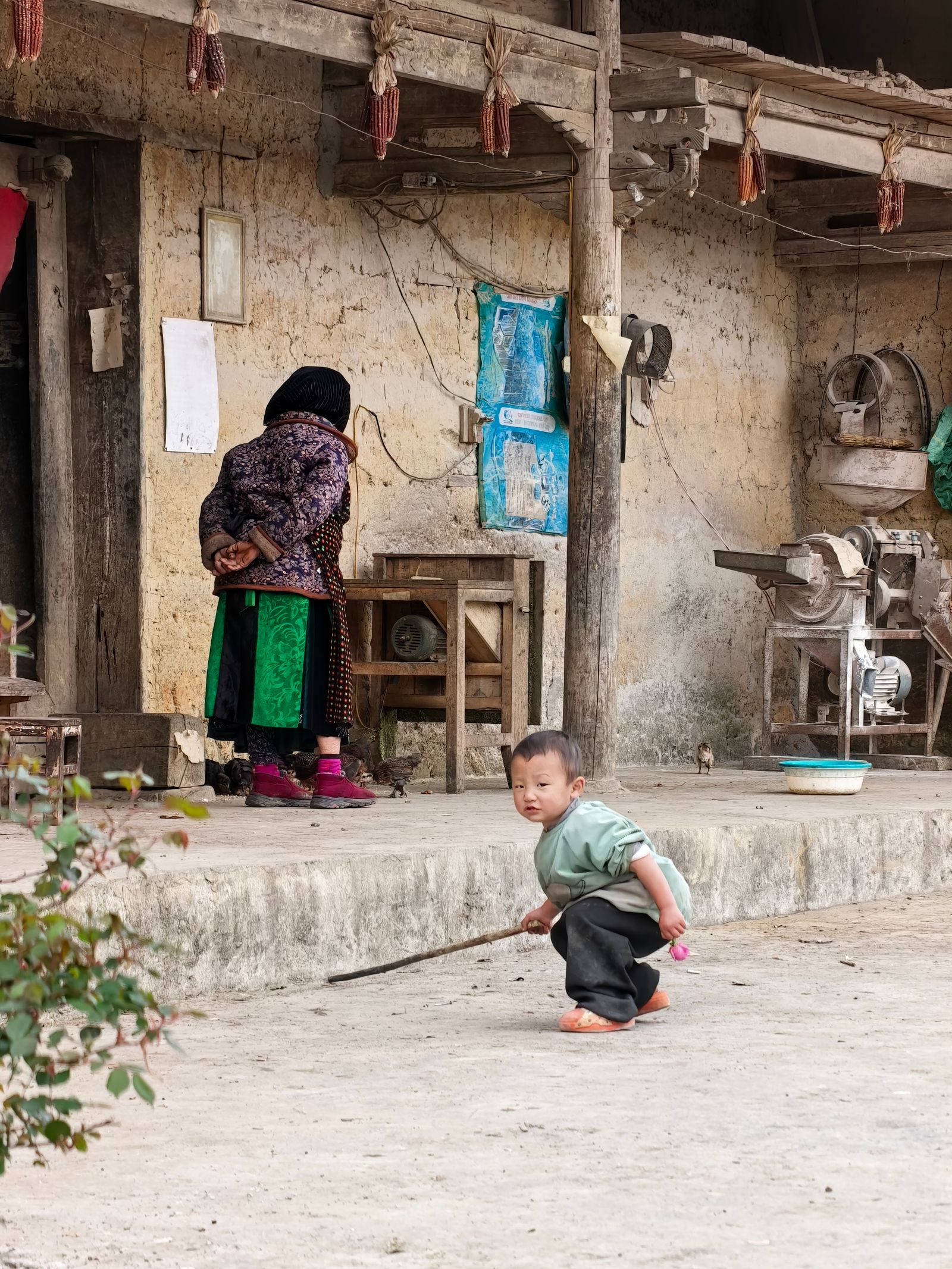
The important thing is not to treat local people like decoration. A good photo of an older person should feel respectful, not extracted. Slow down. Smile. Let your guide help communicate. Ask permission when it is close, direct, or personal.
Sometimes the best photo happens after the camera is lowered. A conversation begins. Tea is offered. A small laugh happens. The scene becomes human first and photographic second.
That is when the image has weight. It is not just a stranger in a beautiful place. It is a small encounter inside the journey.
The Child on the Roadside
Children are part of the visual memory many travelers have from Ha Giang. They wave from the roadside, walk to school in colorful jackets, play near village houses, or watch passing motorbikes with curiosity.
These moments can be beautiful, but they also require care. Children are not travel props. They are people, and they deserve respect and privacy.
The most respectful photos are often not close-up faces taken suddenly. They are wider scenes: a child walking through morning light, a group playing in a village lane, a school path, a small figure inside a large landscape.
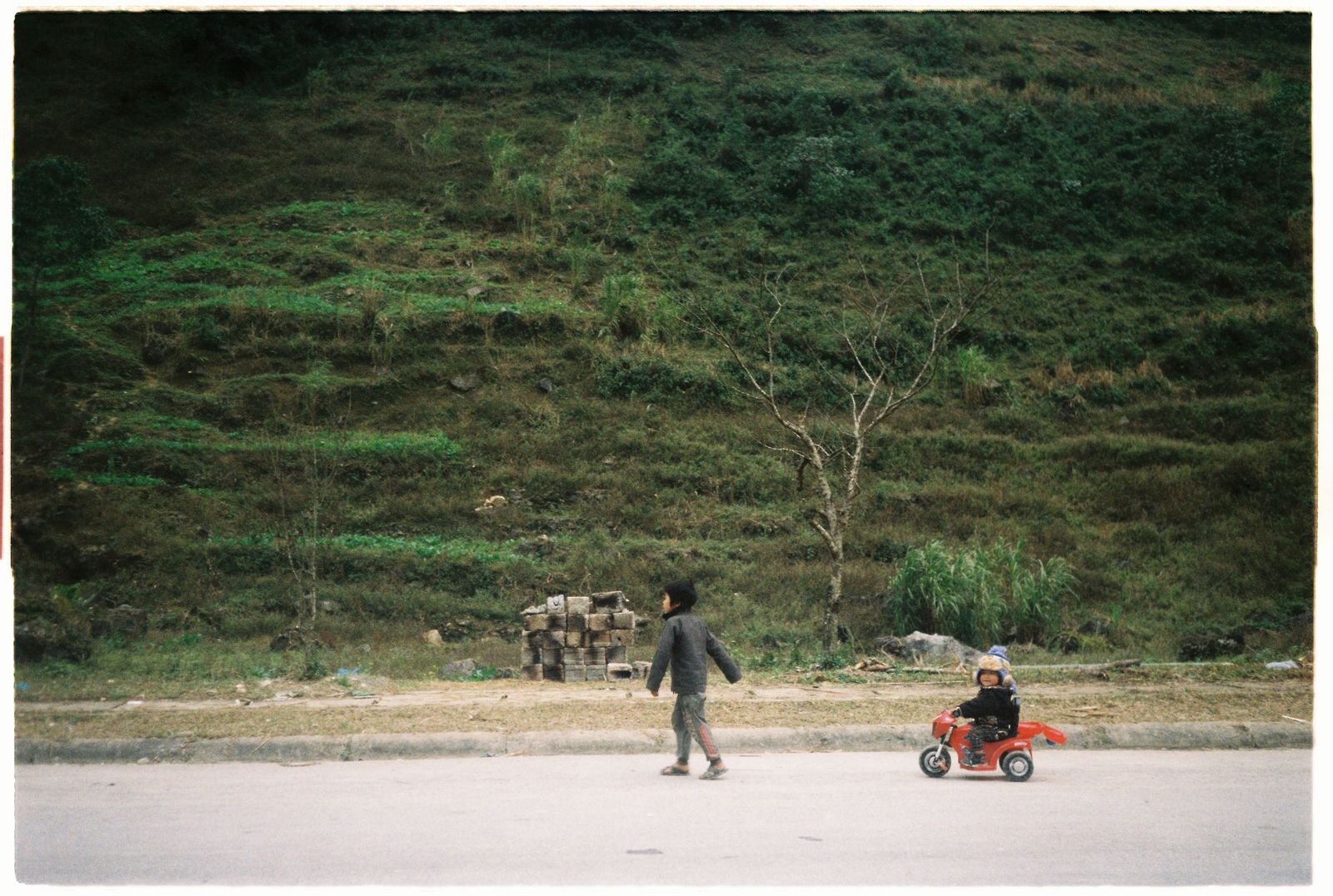
A child in a photo can change the whole feeling of a scene. The mountains become less empty. The road becomes part of daily life. The village becomes more than a stop. The photo begins to show a real place, not just a destination.
But the best approach is patience. Do not rush toward children with a camera. Do not push for poses. Do not interrupt daily life just to create a photo. If the moment is natural and respectful, it will usually be stronger anyway.
Coffee Stops and Quiet Frames
Coffee stops are underrated photography moments on the Ha Giang Loop.
Many travelers think the camera should come out only at viewpoints. But a coffee stop can offer some of the best storytelling images of the trip: helmets on a bench, hands around warm cups, a guide looking at the road, fog behind a balcony, motorbikes resting outside, morning light on a table.
These are not the obvious images, but they are the ones that help people remember how the journey felt.
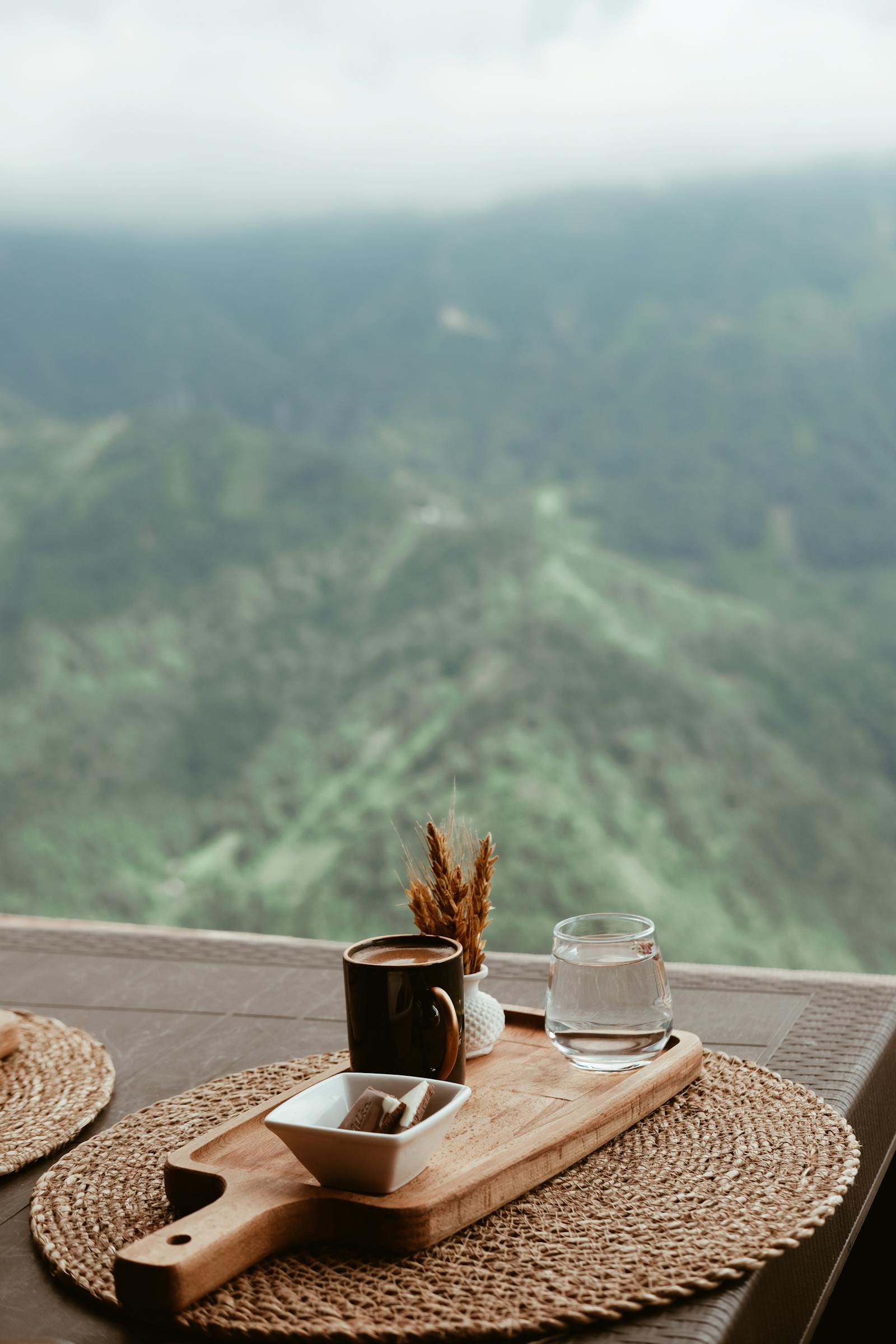
A good coffee photo is rarely just about coffee. It is about pause. It shows the space between movement. It reminds you that the Ha Giang Loop is not only riding, stopping, photographing, and riding again.
It is also sitting still long enough to notice where you are.
Goats, Buffalo, Dogs, and the Road’s Little Surprises
Ha Giang roads are shared roads. Motorbikes, trucks, local families, schoolchildren, buffalo, dogs, chickens, and goats all move through the same mountain world.
For travelers, this can be funny, surprising, or sometimes inconvenient. For photographers, it can be gold.
A herd of goats crossing the road can turn an ordinary curve into a perfect story. A buffalo standing in fog can become more memorable than a famous viewpoint. A dog sleeping in front of a stone house can say more about the rhythm of a village than a wide landscape ever could.
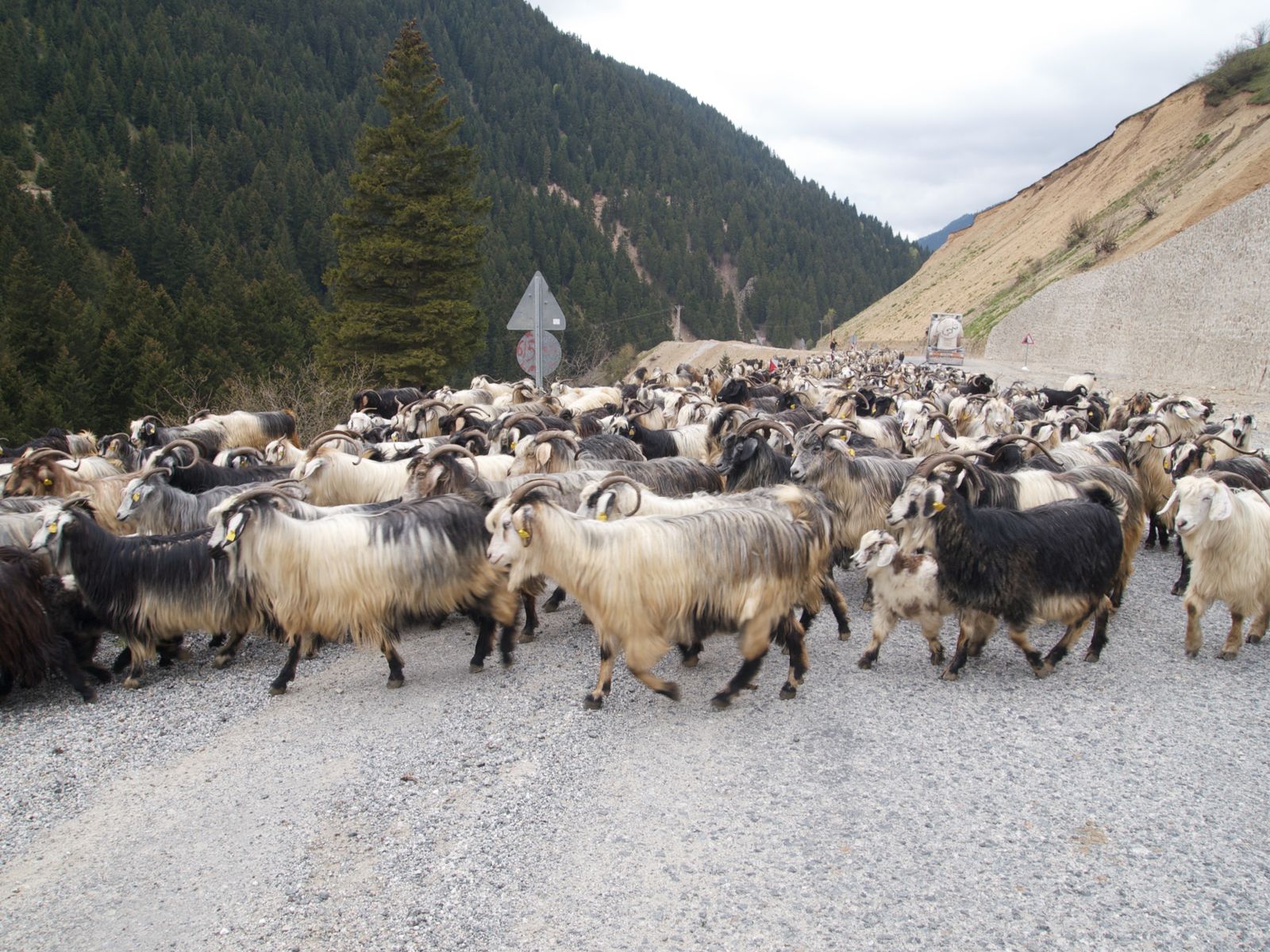
These moments are strong because they are not staged. They remind you that the loop is not a private scenic road built for travelers. It is part of local life.
When animals appear, slow down first. Safety matters more than the photo. Then, if there is space, observe. The best image may be a wide frame: road, animal, mountain, rider, village, light. A small ordinary event becomes the whole story.
Morning Light: The Best Photographer in Ha Giang
Morning light changes everything in Ha Giang.
The same road that looked ordinary in harsh midday sun can become soft and beautiful after sunrise. Stone houses glow. Rice terraces hold mist. Motorbike headlights cut through fog. Smoke rises from kitchens. People begin their day.
If you care about photography, the early hours matter.
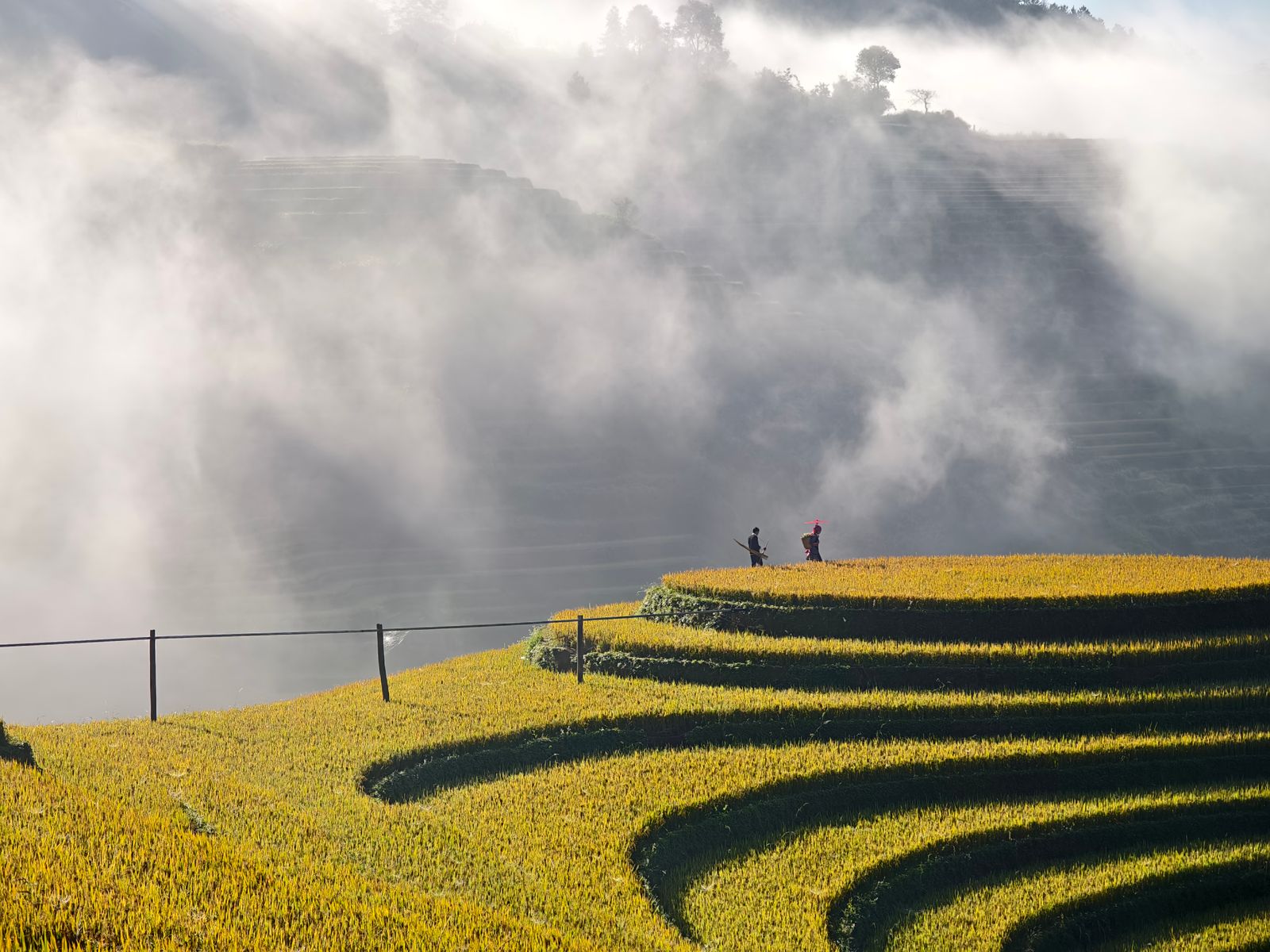
Morning light is not only about color. It is about rhythm. Villages are waking up. Roads are quieter. The air is cooler. The mountains feel less busy. People are doing real morning things, not performing for visitors.
This is when small scenes become powerful: someone sweeping a doorway, a child walking to school, steam rising from breakfast, a guide checking the bikes, or the first sunlight touching a valley while the rest remains blue and cold.
A viewpoint at noon may be bigger. But a village in morning light may be more beautiful.
How to Photograph Ha Giang More Authentically
Authentic photography is not about finding something “untouched” or pretending local life exists for your camera. It is about paying attention without forcing the scene.
Ha Giang already has enough beauty. You do not need to over-stage it. You need to slow down enough to see it properly.
Look beside the viewpoint
After taking the obvious photo, turn around. Look at the road, the people waiting, the motorbikes, the coffee stall, the village behind you, and the weather moving in.
Wait for life to enter the frame
A beautiful landscape becomes stronger when something human, animal, or atmospheric gives it scale and movement.
Use weather instead of fighting it
Fog, rain, clouds, and soft light can create mood. Not every good photo needs perfect visibility.
Photograph the journey, not only the destination
Helmets, coffee, roads, hands, meals, homestays, animals, and quiet pauses are all part of the story.
Simple Ha Giang photography checklist
- Wake up early at least once for morning light.
- Keep your camera ready during coffee stops and village walks.
- Take wide scenes, medium scenes, and small details.
- Photograph weather: fog, clouds, rain, and changing light.
- Wait a few minutes before leaving a viewpoint.
- Ask permission for close portraits, especially children and elderly people.
- Do not block roads or disturb local life for a photo.
- Take fewer photos sometimes, and look longer.
A Note on Respectful Travel Photography
Ha Giang is beautiful, but it is not a photo studio. Villages are real homes. Children are real children. Grandparents, farmers, guides, shop owners, and families are not background objects for a travel image.
Respectful photography means understanding when to ask, when to step back, and when not to take the photo at all.
For close portraits, ask permission. If language is difficult, smile, gesture to the camera, and let your guide help. If someone says no, looks uncomfortable, turns away, or avoids the camera, respect that immediately.
The best travel photography does not take from a place. It pays attention to it.
Why the Best Photo Often Comes After You Stop Chasing It
When you chase famous photos too hard, you start seeing Ha Giang as a list of targets. Viewpoint. Pose. Road curve. Drone shot. River view. Done.
But the best photo often comes when you stop hunting for proof and start noticing the place.
You notice fog sliding through a valley. You notice a grandmother watching the road. You notice a child’s bright jacket against a grey stone wall. You notice goats stopping traffic like they own the mountain, which, honestly, they sort of do. You notice coffee cooling on a table while clouds move behind it.
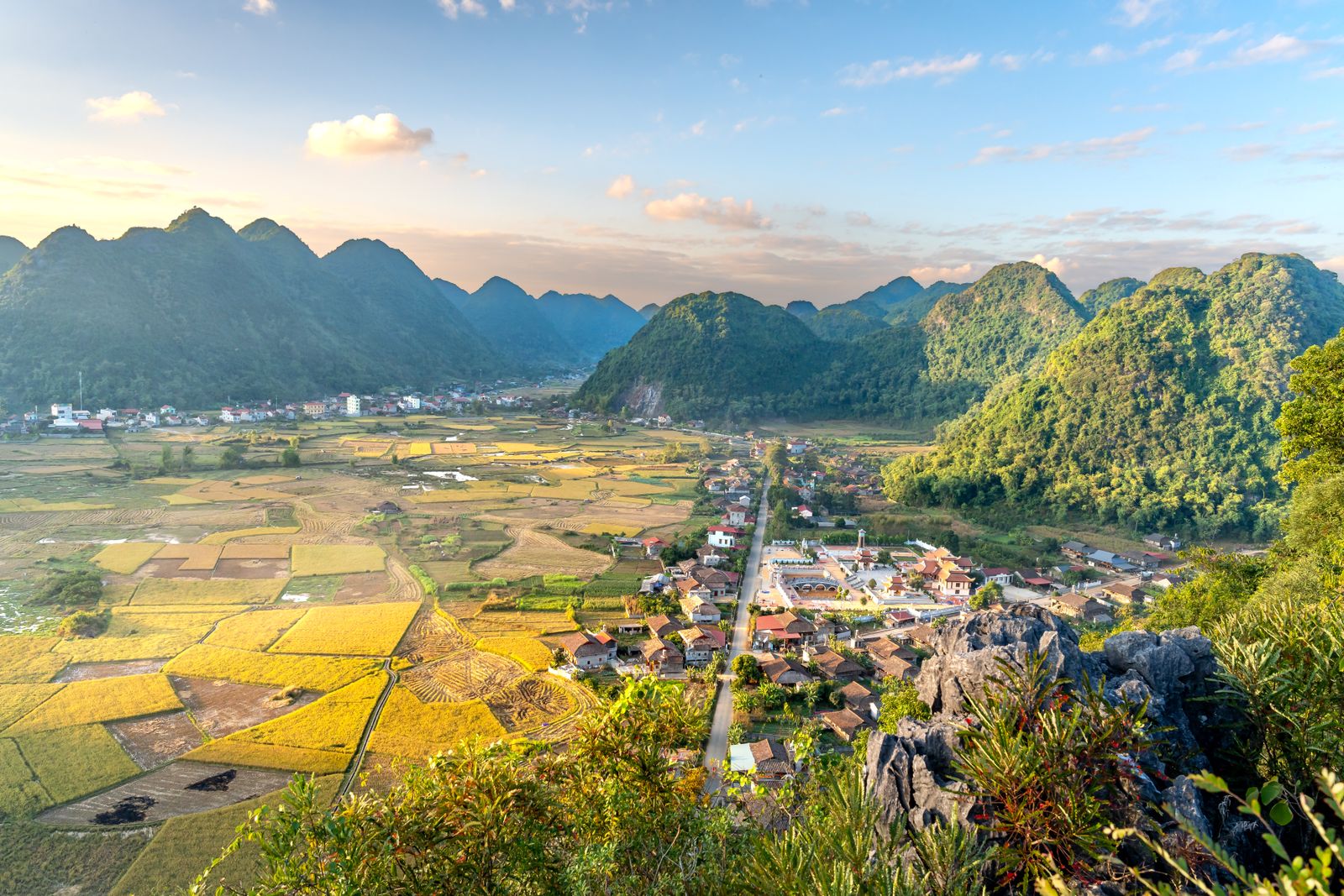
These are not secondary moments. They are the heart of travel photography.
The famous viewpoint shows the place at its most recognizable. The unexpected moment shows the place as it is living and changing in front of you.
Final Thought: Ha Giang Rewards Attention
Ha Giang does not need to be exaggerated. It is already dramatic. The mountains are high, the roads are winding, the valleys are deep, and the scenery is powerful.
But the real photographic magic often happens at a smaller scale.
A cup of coffee. A doorway. A goat. A child walking home. A grandmother’s hands. A curve in the road. Fog hiding half the world. Morning light touching one wall and leaving everything else in shadow.
These are the images that feel authentic because they are not trying too hard.
So yes, photograph the famous viewpoints. Stand at Ma Pi Leng. Look down at the river. Take the wide shot. You will probably be glad you did.
But then turn around. Wait. Walk. Drink coffee. Watch the clouds. Notice the road. Pay attention to people. Let the day surprise you.
Your best Ha Giang photo is probably waiting somewhere you did not plan.
Experience Ha Giang With Time to Notice It
Ha Giang Loopers Tour is a licensed local tour operator in Ha Giang. Our approach focuses on safe riding days, carefully selected stops, local guides, villages, food, culture, photography, and enough time to enjoy the journey properly.
Explore Ha Giang Loop ToursBefore your trip, you can also read our Ha Giang Loop packing checklist to prepare for mountain weather, long riding days, and local homestays.
Ha Giang Loopers Tour is a licensed local tour operator in Ha Giang, supporting the local community and helping travelers experience the loop in a slower, safer, and more meaningful way.


